
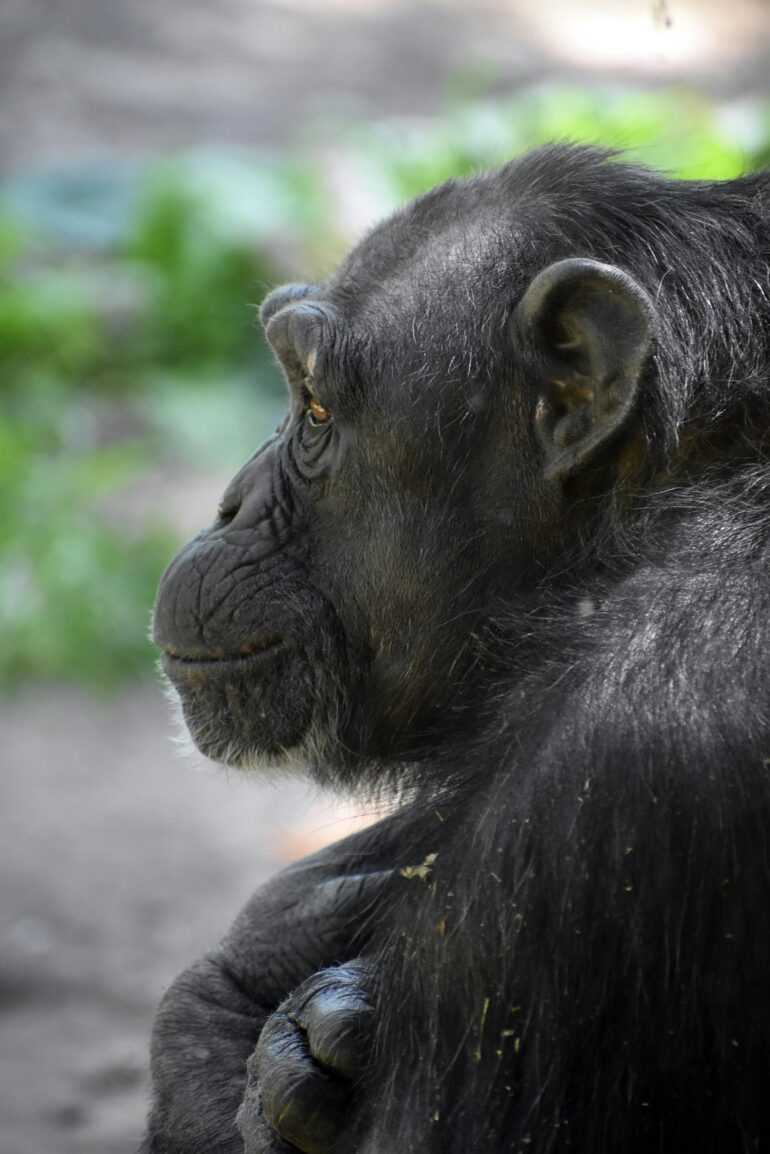
Deep inside the lush rainforest of Uganda’s Kibale National Park, a community of chimpanzees that lived in relative harmony for over two decades has been tearing itself apart. What scientists are now calling a chimpanzee civil war has been unfolding in the forest since 2015, and the findings, published this week in the journal Science, are shaking up how researchers understand conflict, community and the roots of violence in our closest living relatives.
One Community, Two Enemies
The Ngogo chimpanzee community was, for many years, one of the most studied and closely observed groups of wild primates in the world. At its peak, the community numbered around 200 individuals, making it the largest known habituated chimpanzee group ever recorded. For roughly two decades, the chimps shared territory, formed friendships and mated across their social circles.
Then, in June 2015, something changed.
Aaron Sandel, an associate professor of anthropology at the University of Texas, was observing the group when a Western party of chimps approached a Central one. Normally the two would mingle and separate. This time the Western chimps fell silent, then ran. The Central chimps chased. “Nothing like that had been observed before,” Sandel recalled.
What followed was not a single incident but the beginning of a slow, deadly fracture. Over the next two years, the two clusters withdrew from each other socially and geographically. By 2017 they occupied entirely separate territories and patrolled their borders against outsiders. By 2018, the killing had begun.
The Death Toll
Between 2018 and 2024, researchers witnessed Western adult chimps kill seven males and 17 infants from the Central group. An additional 14 adolescent or adult Central males disappeared during the same period. Their bodies were never recovered, and because they showed no signs of illness, researchers believe at least some of them were also killed.
Sandel’s team has documented further attacks since the data analysis for the study ended. The war, he said, is still ongoing.
One of the most documented casualties was a chimpanzee named Basie, a large, gregarious 36-year-old male who had spent his entire life among the Ngogo community. On what turned out to be his last full day alive, he woke at dawn, foraged for figs and moved through his usual routines. That evening, a patrol group of around 13 adult chimps from the opposing faction arrived. Three surrounded him. Ten attacked on the ground, piling on him and biting him.
Basie’s death in 2019 was the second recorded casualty of the conflict.
Why It Happened
Researchers believe the split was not triggered by a single event but by the gradual erosion of social bonds between the two clusters. The study points to several contributing factors including an unusually large group size, competition over food and reproduction, a shift in alpha male leadership and a series of deaths among individuals who had acted as social bridges between the two sides.
“Here are individuals who have helped each other before and cooperated,” said John Mitani, professor emeritus in anthropology at the University of Michigan, who had been studying the Ngogo community for two decades when the violence broke out. “Now they view each other as the enemy.”
Crucially, this was not a conflict driven by ethnicity, religion or political ideology. “They don’t have ethnicity and religion and political ideology, all these cultural traits that we often identify as a major cause of conflicts in humans, especially internal conflicts like civil wars,” Sandel noted. Instead the researchers believe the violence grew from broken friendships, clique formations and the collapse of the social networks that once held the community together.
Only the Second Time in History
This is only the second documented case of a chimpanzee civil war. The first occurred in Gombe, Tanzania in the 1970s, when the late primatologist Jane Goodall observed a splinter group form and then be systematically killed by former group mates. She described those years as “the darkest years in Gombe’s history.” Because the Gombe chimps had been provisioned with bananas by researchers, some scientists questioned whether the violence was truly natural behaviour. The Ngogo case involves no such provisioning. It is, as Sandel puts it, the first time one can say definitively that this kind of civil war happens in the wild.
Scientists estimate that chimpanzee communities split, on average, only once every 500 years. The research drew on 24 years of social network data, 10 years of GPS-based ranging records and 30 years of demographic information, making it one of the most data-rich analyses of primate conflict ever published.
What It Means for Uganda and Wildlife Tourism
The Ngogo community sits within Kibale National Park, one of Uganda’s premier wildlife destinations and home to one of the highest densities of primates on earth. The park draws thousands of visitors annually for chimpanzee tracking experiences that are among the most sought-after wildlife encounters in East Africa.
The ongoing research at Ngogo, now spanning three decades, is part of what makes Kibale not just a tourism destination but a living scientific laboratory. The civil war story, grim as it is, is also a reminder of the extraordinary depth of behaviour researchers are still uncovering in these forests.
Mitani has expressed concern that the Central group may be heading toward collapse. With so many infants killed and adult females defecting to the Western side, he said plainly that he believes “we are witnessing an extinction event” for that subgroup.