
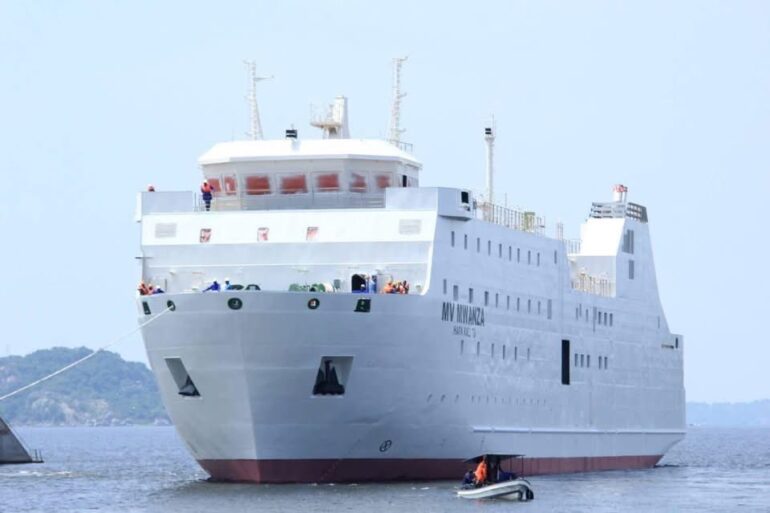
Uganda and Tanzania have jointly unveiled MV New Mwanza, East Africa’s largest locally built freshwater Roll-on/Roll-off passenger vessel (Ro-Pax), in a development expected to significantly boost transport and trade across Lake Victoria.
The modern vessel was unveiled at the port city of Mwanza in Tanzania, marking another milestone in the East African Community’s efforts to strengthen regional connectivity and economic integration through improved water transport infrastructure.
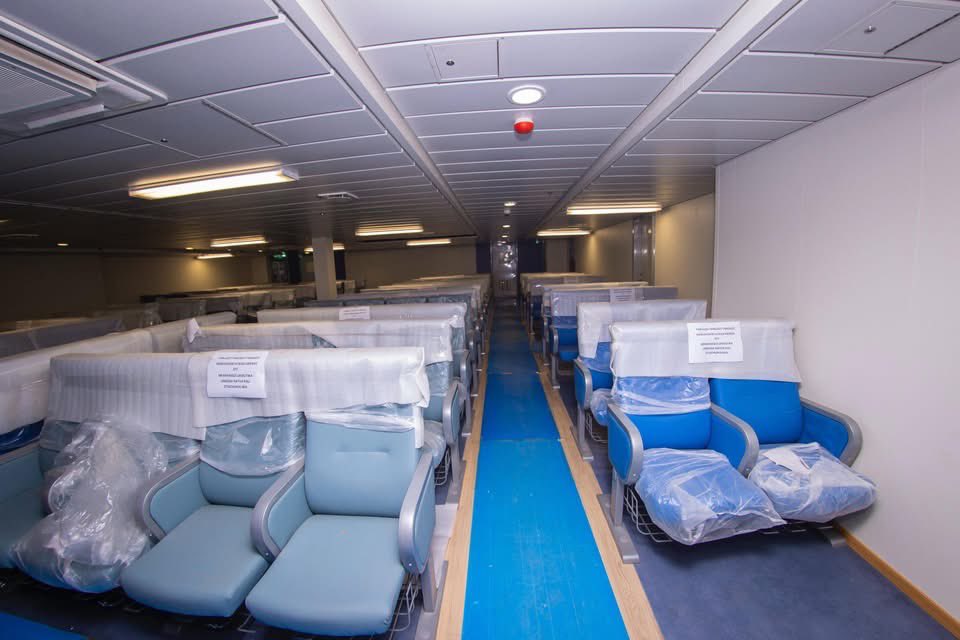
The MV New Mwanza, measuring about 92.6 metres in length and weighing approximately 3,500 tonnes, has the capacity to carry up to 1,200 passengers and 400 tonnes of cargo. The vessel can also transport 20 small vehicles and three large trucks, making it one of the most versatile transport assets currently operating on Lake Victoria.
Constructed locally in Tanzania at an estimated cost of Sh120 billion (about USD 50 million), the vessel is capable of reaching speeds of up to 16 knots. This improved speed is expected to reduce travel time between major lake ports. For example, the journey from Mwanza to Bukoba, which previously took between eight and ten hours, is projected to drop to roughly six to seven hours.
The ship will be jointly operated by the Tanzania Shipping Agencies Corporation (TASHICO) and Marine Services Company Limited (MSCL). It will serve key routes connecting Tanzanian ports such as Mwanza, Bukoba and Musoma with Uganda’s Port Bell and Jinja, as well as Kenya’s Kisumu port.
Leaders from both countries have been credited for supporting the project, which underscores growing cooperation within the East African Community aimed at improving regional trade corridors and strengthening economic diplomacy among partner states.
Lake Victoria — Africa’s largest freshwater lake shared by Uganda, Tanzania and Kenya — already plays a critical role in fisheries, passenger transport and regional commerce. The introduction of the MV New Mwanza is expected to further expand these activities by providing safer, faster and more reliable maritime transport.
The development also builds on other recent investments in lake transport infrastructure. Uganda in 2024 commissioned MV Mpungu, a 96-metre cargo vessel designed to transport up to 21 trucks per voyage between Port Bell, Mwanza and Kisumu, helping reduce the cost of transporting goods across the region.
Together, these maritime investments are seen as part of a broader strategy to unlock the economic potential of Lake Victoria while easing pressure on congested road networks that currently handle the bulk of regional cargo.
However, analysts and industry observers note that Uganda may need to accelerate upgrades to some of its lake ports to fully benefit from the new vessel. Facilities such as Port Bell and Jinja may require further modernization to efficiently accommodate larger vessels and increased cargo volumes.
The concerns highlight the importance of synchronizing regional infrastructure development to ensure seamless maritime operations across the shared lake.
Nonetheless, the arrival of the MV New Mwanza presents a major opportunity for Uganda and its neighbors to deepen regional trade, cut logistics costs and expand opportunities in sectors such as tourism, transport and cross-border commerce.
As regional integration efforts gather pace, Lake Victoria continues to emerge as a strategic trade corridor capable of unlocking new economic possibilities for millions of East Africans.