
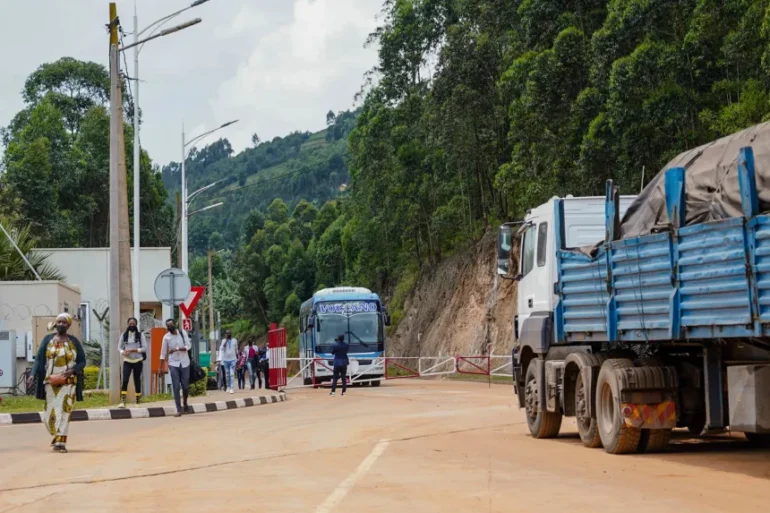
Rwanda has announced stricter border and health surveillance measures following the worsening Ebola outbreak in the eastern regions of Democratic Republic of the Congo, while reaffirming that no Ebola cases have been detected in Rwanda.
In a statement released Friday, the Ministry of Health Rwanda said the new measures are aimed at strengthening preparedness, improving early detection, and preventing any possible importation of the virus into the country.
Enhanced Screening at Borders and Airport
Authorities have intensified health screening and surveillance at all major land border crossings between Rwanda and the DRC.
Additional entry control measures have also been introduced at Kigali International Airport for all incoming travellers.
The tightened surveillance is particularly focused on high-traffic transit points in Rubavu and Rusizi districts, including Petite Barrière, Grande Barrière, and Kabuhanga border posts near Goma, as well as the Rusizi I and Rusizi II crossings bordering Bukavu.
Under the new directives, all foreign nationals who have travelled to or transited through the DRC within 30 days before attempting to enter Rwanda will be denied entry effective immediately.
The move follows recent incidents in which several foreign travellers arriving from the DRC through Bujumbura were reportedly denied entry into Rwanda as part of the country’s reinforced Ebola prevention measures.
However, Rwandan citizens and foreign residents with valid residency permits will still be allowed to enter the country.
Those who recently visited or transited through the DRC will be required to undergo mandatory quarantine in accordance with national public health guidelines.
Rwanda Says Country Remains Safe and Open
Despite the stricter controls, the government stressed that normal activities across Rwanda remain unaffected, including tourism, conferences, business operations, events, and domestic travel.
“Rwanda remains open, safe and prepared,” the ministry stated, encouraging residents and visitors to continue observing standard hygiene practices and to follow official health guidance.
The ministry also confirmed that it has been working closely with international partners, including World Health Organization Rwanda, diplomatic missions, and humanitarian organisations to coordinate preparedness and response efforts.
Citizens and residents have been encouraged to seek health information or report symptoms through the Rwanda Biomedical Centre emergency hotline 114.
Ebola Outbreak Expands in Eastern DRC
The Ebola outbreak, first reported in Ituri Province, has since spread to North Kivu and South Kivu provinces, raising regional concern across East and Central Africa.
Two confirmed Ebola cases have also been reported in neighbouring Uganda.
According to figures released by DRC Health Minister Roger Kamba, the country has recorded 626 suspected cases and 159 probable deaths since officially declaring its 17th Ebola outbreak on May 15, 2026.
The outbreak involves the rare Bundibugyo strain of Ebola, for which there is currently no approved vaccine or targeted treatment.
Health experts say containment efforts now heavily depend on rapid testing, strict monitoring, and cross-border surveillance to prevent wider regional spread.
Rwandan authorities said they will continue closely monitoring developments in the DRC while reinforcing preventive and emergency response systems to safeguard public health.