
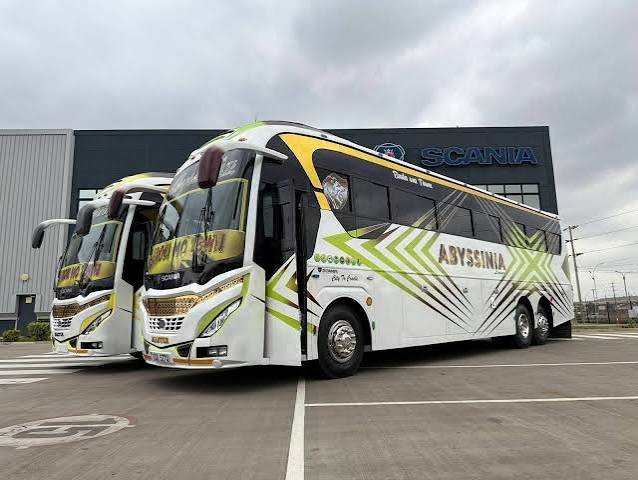
Kenya Power announced a partnership with Advanced Mobility Africa and BasiGo for the journey during the Nordic-Africa EV Summit, which opens September 14 at the Science Museum in Addis Ababa. The trip is presented as the first by a passenger bus on the route.
The Kenyan green-mobility startup said it had provided a bus assembled in Thika, while state-owned Kenya Power is responsible for installing charging equipment along the route. The journey follows an initial test on the same corridor a year earlier.
In 2025, a convoy of electric cars traveled the route. Operating a passenger bus presents a different challenge: it requires carrying passengers, maintaining a schedule and relying on charging stations that are not yet available along the corridor.
The test therefore goes beyond the technical ability of an electric vehicle to cover the distance. It will also examine whether two countries can coordinate the infrastructure needed to operate cleaner transport across their border. East Africa already has a foundation for that effort.
When the Road Becomes a Laboratory
Both countries have already begun their own electric transport transitions. Ethiopia took a major step in 2024 when it banned imports of fuel-powered vehicles, becoming the first country in the world to take such a measure.
The decision reflected two economic considerations. Ethiopia was spending about $447 million annually on fossil-fuel subsidies, while hydropower accounts for 90% of its electricity generation.
Addis Ababa already has 110 electric buses in service and about 100 public charging points. A dedicated 15.3-kilometer urban transport corridor is under construction and is expected to open in 2027. The French Development Agency is providing €87 million, or about $100.4 million, for the project.
Ethiopia aims to have 2,230 charging points and 500,000 electric vehicles by 2030.
Farther west, Nairobi is preparing a similar $377 million project financed by the European Union, European Investment Bank and French Development Agency. Kenya’s electric vehicle fleet more than tripled in two years, from 2,694 vehicles in 2023 to 9,047 in May 2025.
In Tanzania, Dar es Salaam has developed a 64.8-kilometer bus rapid transit network. Its second phase, launched in 2025, is expected to accommodate 3 million passengers a day.
Cross-Border Corridors Are the Next Test
The transition is also beginning to extend beyond East Africa. In April 2026, an electric convoy traveled 2,440 kilometers from Lobito, Angola, to Lusaka, Zambia. More than 200 electric mobility companies now operate across Africa, while the continent’s electric bus segment is growing 44% annually.
The Nordic-Africa EV Summit itself reflects the sector’s growing profile. The event is backed by the embassies of Sweden, Norway, Finland and Denmark, with the African Union and Germany’s GIZ among its partners.
The remaining challenge is to address issues that national programs have yet to resolve. Running an electric bus between two countries requires coordination over charging equipment and border procedures, while responsibilities between operators have not previously been negotiated on this scale.
Kenya Power is entering the project after its revenue from EV charging increased 113-fold over three years. BasiGo, the Nairobi-based manufacturer that aims to reach 1,000 buses by 2027, sees the corridor as a showcase for the wider African market.
Whether the journey succeeds or encounters difficulties, it will provide an early indication of what East Africa still needs to build before cross-border electric transport can operate on a broader scale.