
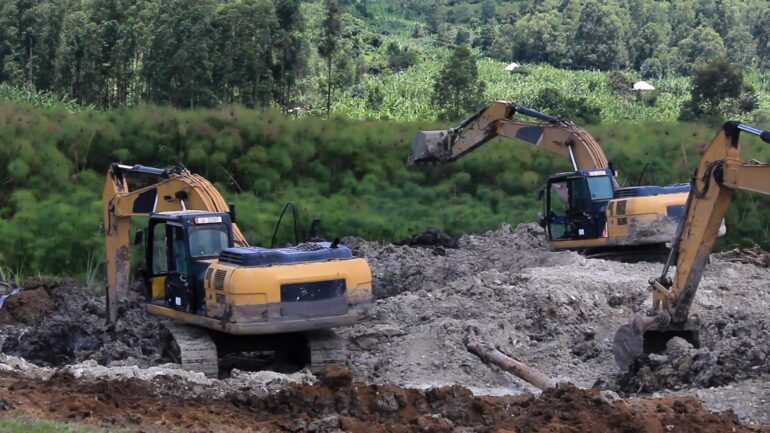
“We have four people who have come with land titles claiming the biggest part of Mabira Forest. They have written to us indicating that they want their land back to engage in commercial agriculture,” a Ministry official told the committee.
Shs320 billion needed for wetland demarcation
The Ministry told MPs that it requires Shs320 billion to demarcate the remaining 144,315 kilometres of wetlands that have not yet been clearly marked.
Officials said the exercise is necessary to establish boundaries and prevent disputes between wetlands and privately owned land, which they said have contributed to continued encroachment.
“Without demarcation, we cannot tell where the wetland ends and where private land begins. That is why encroachment continues,” an official explained.
The Ministry also said it is in the final stages of drafting a new Wetlands Bill intended to strengthen the legal framework for protecting wetlands across the country.
Anywar said the proposed legislation would provide stronger backing for enforcement and protection of gazetted wetlands.
“We are in the final stages of the Wetlands Bill. Once passed, it will strengthen enforcement and protection of all wetlands across the country,” Anywar said.
NEMA grilled over Lubigi evictions
Officials from the National Environment Management Authority (NEMA) also faced scrutiny over enforcement operations in the Lubigi wetland, particularly the demolition of structures during recent evictions.
MP Mukuve questioned why a petrol station remained standing while other structures, including people’s homes, had been demolished.
“Are you committed to non-discriminatory operations? Why is that petrol station still standing when people’s homes were brought down?” Mukuve asked.
The questioning centred on whether environmental enforcement is being applied consistently to all occupants and developers operating in protected wetlands.
NFA faces land encroachment questions
The National Forestry Authority (NFA) was also criticised over allegations that some of its demarcation activities have resulted in the occupation of privately owned land.
MPs questioned the authority’s approach to establishing boundaries between forest reserves and private property, particularly where ownership claims are contested.
Committee Chairperson Dan Kimosho said MPs would summon the four individuals claiming ownership of part of Mabira Forest, as well as officials from NFA and NEMA, to provide further explanations.
The committee also said it would push for urgent consideration and passage of the Wetlands Bill, arguing that clearer legal and physical boundaries are necessary to strengthen environmental protection and reduce conflicts over land.
The developments place renewed focus on the difficulty government faces in protecting public forests and wetlands while resolving competing claims over land ownership, occupation and environmental rights.