
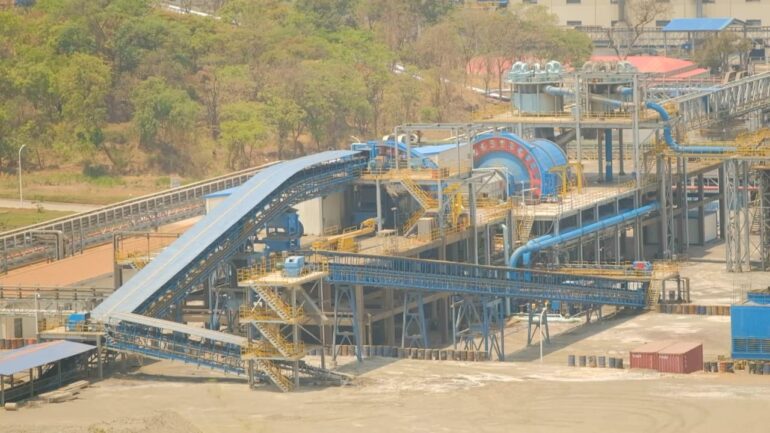
Congolese citizens describe the Democratic Republic of Congo as “Eloko Ya Makasi” which literally means “a powerful thing” in their local Lingala language because of its vast mineral deposits and the resilience of its people. The country has minerals estimated at 24 trillion dollars much of which remains untapped. From copper, cobalt, gold, diamonds, lithium, tantalum to coltan – some of which are critical to the global energy transition – the DRC has it all. But despite its immense wealth, the country is one of the poorest in the world. More than three decades of political instability, conflict and corruption have left the Congolese people wallowing in poverty.
The ongoing conflict in eastern Congo by the M23 rebels has worsened the situation by disrupting the livelihoods of millions of civilians. According to United Nations agencies, more than 4 million people have been displaced since the conflict began in late 2021. Fighting has continued in eastern DRC despite mediation efforts by the United States and Qatar.
Congolese President Felix Tshisekedi turned to the United States after losing major eastern towns and cities to the M23 rebels who are widely reported to be backed by Rwanda. Kigali denies the charge and maintains its troops are in Congo as a defensive measure to fight against the Hutu-led FDLR militia that is backed by the Kinshasa administration. A report by UN experts accused both countries of backing rebels seeking to destabilize their governments.
And now global powers with interests in the DRC’s critical minerals have joined the fray.
The United States offered to support peace efforts between the DRC and Rwanda while pursuing closer cooperation on access to the DRC’s critical minerals. The move has been widely seen as part of Washington’s broader plan to reduce its dependence on China which remains a major player in the extraction and processing of the DRC’s critical minerals.
Recently, the US Department of the Treasury’s Office of Foreign Assets Control imposed sanctions on a Rwandan gold mining firm, Gasabo Gold Refinery, for allegedly working with the M23 rebels to smuggle minerals from eastern DRC to Rwanda.
The ongoing conflict in eastern DRC has fostered illegal mining, smuggling and undermined investor confidence in a country that has immense potential to transform the region.
Nevertheless, the DRC authorities are carrying out measures to streamline the mining industry. Last year, they introduced a digital mineral traceability platform to curb illegal mining. The platform seeks to restore transparency and regulate the mining sector that has been plagued by decades of conflict where armed groups have been vying for control of the mining sites which has deprived the country of revenue.
The DRC’s admission into the East African Community in 2022 presented significant opportunities for the country and partner states in terms of broadening regional trade, cross border investment and industrial cooperation. Some Kenyan banks have already made forays into the DRC to expand their footprint in the volatile region.
But the mining sector still requires a lot of reforms and the restoration of peace in eastern Congo for EAC member states to invest in the lucrative sector. Peace talks between the government and the M23 rebels are moving slowly amid mutual mistrust and suspicion. Relations between Kinshasa and Kigali are not any better with both sides trading accusations and counter accusations about violations of the US peace deal signed last year.
A stronger commitment to end the conflict from all parties coupled with good governance and the improvement of the business environment can eventually go a long way in unlocking the DRC’s huge mineral potential for the benefit of its people and the wider East African region.
A better regulated mining sector in the DRC would create opportunities for logistics, banks, and manufacturing industries across the region. Earlier this year, the DRC government launched its first gold refinery in the southeastern town of Kalemie to fight against fraud in the gold sector. But many other minerals are still exported abroad in raw form and returned as finished products at high prices. Setting up factories in eastern DRC that add value to the minerals would create jobs and increase the region’s competitiveness. As demand for critical minerals continues to rise, the DRC is seeking investors who can set up industries to transform its minerals locally. Although China and the US have already set up shop, there are still opportunities for investment in the mining sector in Africa’s second largest country